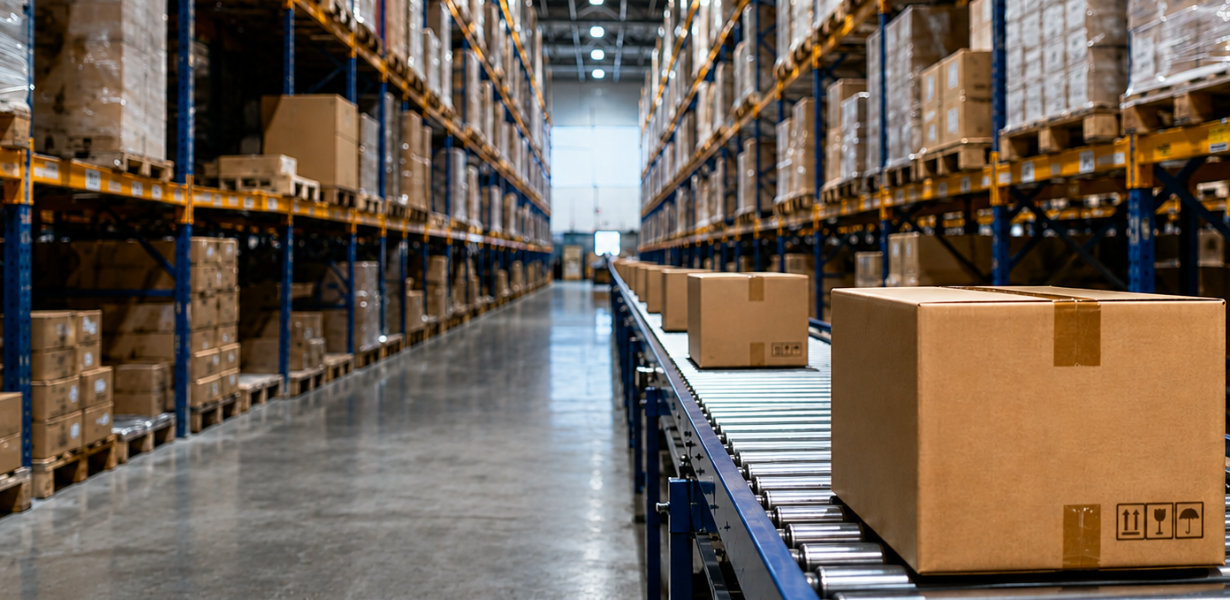
For years, logistics was seen as a purely operational function: storing goods, preparing orders, and managing shipments. However, the market has changed. Today, factors such as delivery speed, adaptability, cost optimization, and international expansion have turned logistics into a key element of any company’s competitiveness. What was once simply a necessary process to keep a business running can now become a genuine competitive advantage.
Through our experience working with companies across a wide range of industries, we have seen how logistics needs have evolved in recent years. Businesses are no longer looking solely for a transportation or warehousing provider; they are seeking solutions that deliver flexibility, visibility, scalability, and operational efficiency. These are some of the logistics solutions that are currently in the highest demand among businesses looking to achieve their growth objectives.
One of the logistics solutions most in demand among businesses today is flexible warehousing: storage spaces and operating models that can adapt to actual business volumes as they change over time. The reason is simple: demand no longer follows a linear pattern. Many companies deal with seasonal campaigns, product launches, promotional peaks, or expansion projects that cause their storage requirements to fluctuate rapidly. Maintaining a dedicated warehouse sized for peak activity can generate unnecessary costs during periods of lower demand.
This pressure is also being felt across the logistics real estate market. According to Cushman & Wakefield, prime logistics rents in Spain increased by around 10% year-on-year in 2024, compared with the EMEA regional average of 4.1%. In addition, availability remains extremely limited in some markets. Colliers reported logistics vacancy rates in Valencia of just 0.9% in the second quarter of 2025, highlighting the pressure on key logistics hubs.
Against this backdrop, many companies are looking for alternatives that allow them to access additional logistics capacity without investing in their own facilities, committing to rigid contracts, or overbuilding their infrastructure. The goal is not simply to secure more space, but to align warehousing capacity with the actual pace of the business. In our experience, this need is particularly common among growing companies, businesses with significant demand peaks, or those entering new markets. In such cases, scalable warehousing solutions make it possible to absorb increases in activity, prepare for campaigns more effectively, and reduce the burden of fixed logistics costs.
➜ A common scenario:
One example we see increasingly often is that of small brands that begin by shipping a few hundred orders per month and, after gaining exposure through a marketplace, an advertising campaign, or an influencer partnership, see their volumes multiply within a matter of weeks. What could initially be managed from an office, a small warehouse, or even the company’s own premises quickly becomes unsustainable when dozens or hundreds of orders start arriving each day. In these situations, access to additional logistics capacity becomes less of a strategic choice and more of an operational necessity.
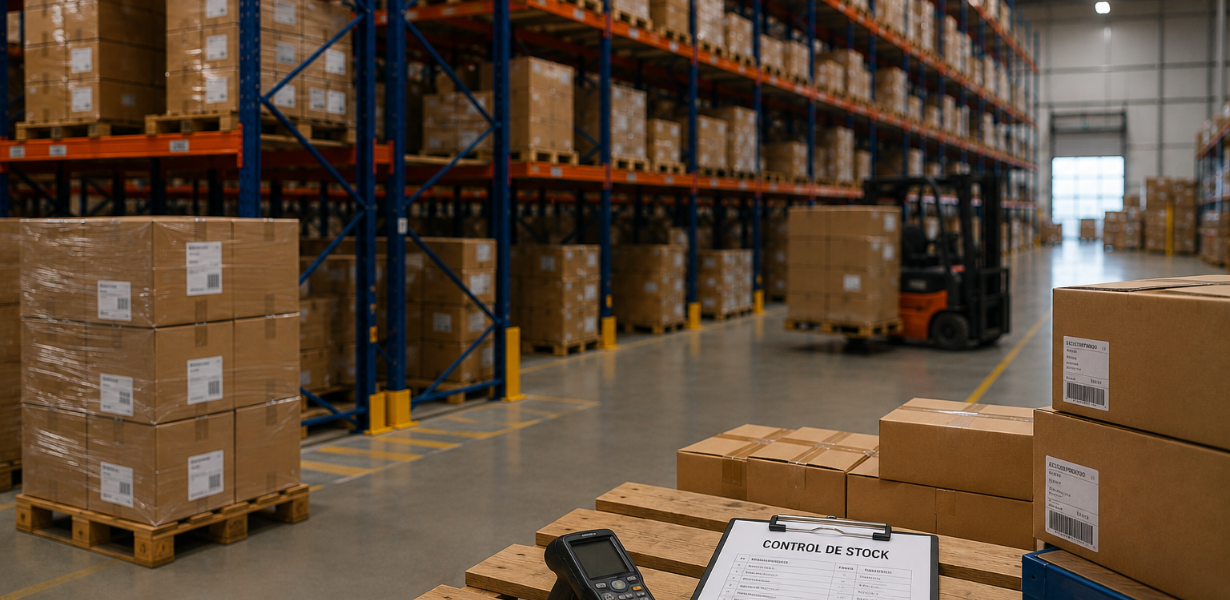
As the number of SKUs, sales channels, and distribution points increases, maintaining accurate inventory control becomes one of the main operational challenges for many businesses.
Without a clear view of product availability, companies can face delays, stockouts, or unnecessary purchases that ultimately affect both profitability and customer service. For this reason, more and more organizations are investing in solutions that allow them to monitor inventory levels in real time and make decisions based on up-to-date data.
The importance of efficient inventory management becomes even more apparent when considering that, according to data from consulting firm IHL Group, issues related to stock shortages and excess inventory result in annual lost sales of more than $1.7 trillion worldwide.
➜ A common scenario:
Many small ecommerce businesses come to us after the problem has already emerged: products that continue to appear as available on their online store despite being physically out of stock, items marked as unavailable when units are still sitting in the warehouse, or difficulties determining how much inventory has been allocated to each sales channel.
Having real-time inventory visibility not only helps reduce operational errors. It also improves purchasing planning, optimizes warehouse space, and enhances a company’s ability to respond quickly to changes in demand.
Transportation remains one of the most critical elements of any logistics strategy. However, business requirements are becoming increasingly diverse. Shipping urgent documents, bulky products, fragile goods, or international orders each presents different challenges. As a result, more and more companies are moving away from models that rely on a single carrier and adopting solutions that can adapt to the specific requirements of each shipment.
Working with multiple logistics providers helps optimize costs, improve geographic coverage, and reduce dependency on a single supplier. It also provides greater flexibility when responding to disruptions, fluctuations in demand, or the specific needs of different markets. For this reason, multi-carrier solutions have become an increasingly valuable tool for businesses looking to improve efficiency without compromising service quality.
➜ Real-world example:
A furniture company had traditionally relied on a single carrier for all its shipments. The system worked well while most deliveries were made within mainland Spain, but challenges began to arise as demand from the Balearic Islands increased. Transportation costs rose significantly, delivery times became less predictable, and some issues took longer than expected to resolve.
In situations like this, having access to multiple carriers makes it possible to select the most suitable option for each destination and shipment type, improving both operational efficiency and the customer experience.
Expanding into new markets often involves much more than simply finding customers in other countries. As international operations grow, businesses face new logistics challenges related to documentation, customs procedures, delivery times, and the coordination of shipments across multiple countries.
What works perfectly at a domestic level does not always remain as efficient once goods begin crossing borders. Every market has its own specific requirements, and as international activity increases, logistics plays a critical role in ensuring smooth operations and a positive customer experience.
The importance of this trend is reflected in data from ICEX. Spain's merchandise exports exceeded €384 billion in 2024, highlighting the growing importance of international expansion for many Spanish businesses.
➜ A real-world example:
A winery that had traditionally sold its products within Spain began receiving orders from distributors in France and Germany. What initially seemed like a straightforward market expansion soon introduced new challenges: coordinating deliveries across different countries, managing varying transit times, and ensuring that international orders arrived in the same condition as those destined for the domestic market. In situations like these, having a logistics infrastructure designed to support international operations can make growth significantly easier to manage.
For this reason, many companies are investing in international logistics solutions that allow them to expand their geographic reach without having to replicate infrastructure or processes in every new market. Leveraging established logistics networks helps accelerate expansion while maintaining operational control as complexity increases.

As a business grows, so does the number of tools involved in its day-to-day operations: ecommerce platforms, management systems, invoicing software, warehouse management solutions, and transportation tools.
The challenge arises when these systems do not communicate with one another. An order may be correctly recorded on one platform but take hours to be reflected in inventory records or cause errors during order picking and dispatch. For this reason, more and more companies are investing in logistics solutions that integrate seamlessly with their management tools and automate the flow of information across different systems.
According to The Future of the Supply Chain report published by McKinsey & Company, digitalization and system connectivity are among the key drivers transforming modern supply chains.
➜ A real-world example:
A cosmetics company initially sells exclusively through its own website. Over time, it expands to Amazon, specialist distributors, and several physical retail locations. What was once a straightforward operation gradually becomes more complex, with each channel managing different information regarding orders, inventory, and product availability. In situations like this, system integration makes it possible to centralize information and reduce operational errors.
When data flows automatically between different tools, businesses gain greater visibility, reduce manual workloads, and can focus more resources on higher-value activities. This is why technology integration has become one of the most sought-after logistics solutions for organizations looking to scale their operations without increasing complexity.
In an environment where customers increasingly expect detailed information about their orders, having real-time visibility into logistics operations has become a necessity for many businesses.
Tracking capabilities make it possible to know exactly where goods are at any given moment, reconstruct their journey throughout the supply chain, and quickly identify any issues that could affect the product or service.
Its importance has grown particularly in industries where control and security are critical. According to GS1, the organization responsible for the identification standards used by more than two million companies worldwide, traceability plays a key role in improving operational efficiency, increasing transparency, and facilitating issue management across the entire supply chain.
➜ A real-world example:
A winery identified an issue affecting a specific batch of products that had been distributed to multiple customers. Without an effective traceability system, determining which bottles belonged to that batch would have required reviewing documentation, delivery notes, and manual records. However, because all the relevant information had been properly recorded, locating the affected products and taking corrective action was significantly faster and more straightforward.
Beyond improving internal control, traceability also builds trust among customers, distributors, and business partners. For this reason, more and more companies are implementing solutions that allow them to monitor their logistics operations and access accurate, real-time information about the status of their goods at any stage of the process.
When a company identifies logistics challenges, the first reaction is often to look for more warehouse space, hire additional staff, or increase transportation capacity. However, in many cases, the real issue is not a lack of resources but the way existing processes are organized.
Small inefficiencies in order fulfillment, product placement, inventory management, or coordination between departments can ultimately lead to delays, errors, and unnecessary operating costs. For this reason, more and more businesses are turning to logistics consulting services to assess their operations and identify opportunities for improvement before making further investments.
The importance of process optimization is reflected in numerous studies on productivity and supply chain management. According to McKinsey, companies that digitize and optimize their logistics operations can reduce logistics costs by between 15% and 20%.
➜ A common scenario:
Companies often assume they need to expand their warehouse because order preparation is taking longer and longer. However, after analyzing their operations, they discover that the problem is not a lack of space but an inefficient layout of their most frequently requested products. Reorganizing key picking areas can reduce unnecessary movement and significantly improve productivity without the need to expand facilities, making it one of the most effective ways to optimize warehouse space.
Logistics consulting helps identify exactly these types of situations, uncover operational bottlenecks, and design more efficient processes. In many cases, relatively small operational improvements can deliver a far greater impact than significantly more expensive investments.
Logistics is no longer just about storing goods or managing shipments. Increasingly, businesses view it as a strategic asset that can directly influence costs, growth potential, and the customer experience they deliver. Today, companies are looking for solutions that enable them to respond quickly to market changes, optimize resources, and maintain full control over their operations.
There is no one-size-fits-all approach to logistics. The needs of a winery, an industrial manufacturer, or a cosmetics brand can vary significantly. What they all share, however, is the same objective: building a logistics operation that supports business growth rather than becoming a constraint.
That is why more and more organizations are partnering with specialized logistics providers capable of designing tailored solutions and delivering a comprehensive view of the entire supply chain.
If you would like to learn how a tailored logistics strategy can help improve the efficiency of your operations, discover Mail Boxes Etc.'s logistics solutions for businesses.
Logistics solutions are the combination of services, processes, and tools that enable the efficient management of warehousing, transportation, distribution, and inventory control, tailored to the specific needs of each business.
Outsourcing logistics gives businesses access to specialized infrastructure, technology, and expertise without the need for significant capital investment. It also improves operational scalability, allowing logistics resources to be adjusted according to the company’s actual needs while supporting greater efficiency and flexibility.
.png)